As an Amazon Associate, we earn from qualifying purchases. Some links on this site are affiliate links at no extra cost to you. Our recommendations are based on thorough research and editorial judgment.


Understanding the Difference Between Wet and Dry Saunas

Understanding the difference between wet and dry saunas is a game-changer for our wellness journey! 1. Dry saunas operate at high temperatures (160°F to 195°F) with low humidity, promoting detoxification and cardiovascular health. 2. Wet saunas, on the other hand, function at cooler temps (90°F to 120°F) with nearly 100% humidity, easing respiratory issues and hydrating skin. Knowing these specifics helps us make informed choices about our health. Stick around and we’ll explore how to choose the right sauna for you!
Key Takeaways
- Dry saunas operate at high temperatures (160°F to 195°F) with low humidity (10-20%), enhancing detoxification and cardiovascular health.
- Wet saunas function at lower temperatures (90°F to 120°F) and provide nearly 100% humidity, aiding respiratory health and skin hydration.
- Dry saunas promote intense sweating for detoxification, while wet saunas create a steam environment that relaxes muscles and eases joint pain.
- Safety measures for both include staying hydrated, starting with shorter sessions, and cooling down gradually after use.
- Personal preference is essential when choosing between sauna types, as each offers unique health benefits tailored to individual needs.
Overview of Sauna Types
Each sauna type offers unique health benefits, so our personal preference plays a big role in the choice. Whether you want the high heat of a dry sauna or the moisture of a wet sauna, either can be a game-changer for your wellness journey! For those seeking a modern approach, infrared saunas offer a comfortable and energy-efficient solution with detoxification benefits.
Key Characteristics of Dry Saunas

When exploring the benefits of dry saunas, it’s essential to evaluate their standout features. High Temperatures: These dry saunas operate at impressively High Temperatures, typically ranging from 160°F to 195°F (70°C to 100°C), creating an environment that promotes intense perspiration and detoxification. Low Humidity: The humidity levels are markedly low, often between 10-20%, which enhances the sauna experience without overwhelming moisture. Material & Construction: Most dry saunas are crafted from durable wood types like cedar, pine, or spruce, adding to their appeal. Regular use not only boosts circulation but also provides numerous health benefits, such as muscle pain relief. For beginners, we recommend sauna sessions between 15 to 20 minutes to guarantee a comfortable start. Infrared sauna domes offer adjustable heat settings to personalize sessions and enhance the overall experience.
Key Characteristics of Wet Saunas

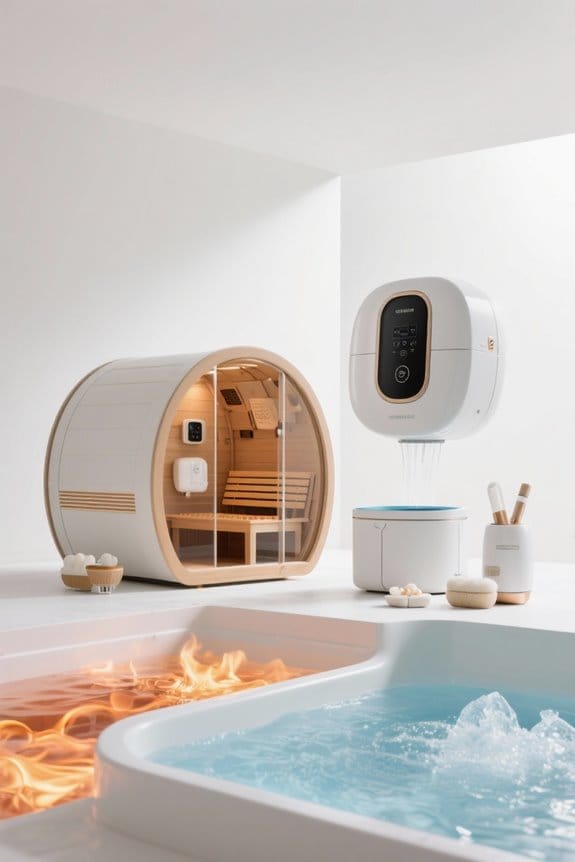
Wet saunas, often referred to as steam baths, are a game-changer for those seeking a unique sauna experience. Lower Temperatures: Operating at comfortable temperatures between 90°F and 120°F (32°C to 49°C), these saunas create the perfect setting for relaxation. High Humidity: With nearly 100% humidity, wet saunas produce steam by pouring water over hot stones or through a steam generator. This steam not only promotes skin hydration but also offers significant respiratory benefits, helping reduce asthma and bronchitis symptoms. The moist heat can alleviate arthritis pain and stiffness, making it a great option for those with chronic joint conditions. For those interested in acupressure foot mats, these can complement the relaxation benefits of a wet sauna by enhancing circulation and providing targeted pain relief. So, if relaxation and health improvement are your goals, consider adding a wet sauna to your wellness routine!
Temperature and Humidity Differences
1. Temperature and Humidity Explained
A dry sauna operates at temperatures between 160°F to 195°F, coupled with low humidity levels of 10-20%. This combination provides intense heat and helps us sweat effectively.
2. Wet Sauna Dynamics
On the other hand, a wet sauna, or steam room, typically ranges from 90°F to 120°F while boasting nearly 100% humidity. The moist heat feels less intense due to that high humidity, making it surprisingly comfortable. Regular exposure to saunas can enhance blood circulation in the body, promoting relaxation and recovery.
3. Steam Generation
Wet saunas generate steam using heated rocks or a steam generator, while dry saunas rely on heating elements. Managing these temperature and humidity levels is a game-changer for achieving those sought-after health benefits.
Health Benefits of Dry Saunas
Experiencing the benefits of dry saunas can be a total game-changer for our health and well-being. Here’s why we should consider them:
- Detoxification: The high temperatures (160°F to 195°F) promote intense sweating, flushing out toxins.
- Cardiovascular Health: Regular use can lower blood pressure and enhance circulation, greatly reducing the risk of heart disease.
- Muscle Soreness Relief: The heat helps alleviate muscle soreness after workouts, aiding in recovery.
- Relaxation and Stress Reduction: Spending time in a dry sauna promotes relaxation, reducing stress levels and boosting mental well-being.
To maximize the benefits, it’s important to ensure proper hydration due to the increased sweating and heat exposure experienced in saunas.
Health Benefits of Wet Saunas
Saunas come in various forms, and wet saunas stand out for their unique benefits. 1. Respiratory Relief**: Wet saunas offer moisture-rich heat, easing breathing for conditions like asthma. 2. Skin Benefits: The moist heat hydrates skin, making it a great solution for dry skin conditions. 3. Arthritis Pain: For those suffering from arthritis, wet saunas can help relax muscles and improve joint flexibility. 4. Detoxification: Higher humidity levels lead to increased sweating, aiding in detoxification by flushing impurities. 5. Mental Well-Being: The warm atmosphere fosters relaxation, reducing stress levels, which can boost overall health. When we choose wet saunas, we’re not just investing in comfort—we’re embracing a game-changer for our health! Moreover, just as electric neck massagers** provide relief from muscle tension, wet saunas also offer therapeutic benefits for muscle relaxation.
Safety Tips for Sauna Use
- Hydrate: Drink plenty of water before, during, and after your sauna session to avoid dehydration.
- Initial Sauna Sessions: Start with 10-15 minutes and gradually increase as we get used to the heat.
- Consult Healthcare Provider: If we have any existing medical conditions, especially cardiovascular or respiratory issues, we must talk to a professional first.
- Towel on the Bench: Place a towel on the bench for comfort and hygiene, which can also reduce the risk of slipping.
- Cool Down: Allow our body to cool down gently post-session to help return our body temperature to normal.
- Consider Infrared Therapy: For an alternative or complementary approach, infrared therapy offers therapeutic benefits like improved circulation and muscle recovery, which can enhance overall wellness routines.
Preparing for Your Sauna Experience
Wearing loose, breathable clothing or a towel enhances comfort and airflow, preventing uncomfortable skin exposure to hot surfaces. It’s wise to limit our initial sauna session to 5-10 minutes, gradually increasing to 15-20 minutes as our bodies adapt. Afterward, we should cool down by resting or taking a cool shower to enhance relaxation. Consider infrared warmth for its ability to promote muscle relaxation and recovery through deep tissue heating.
Personal Preferences in Sauna Choice
After getting ready for a sauna session, picking the right type can be a game-changer for our experience. 1. Understanding Options: Dry saunas offer high temperatures between 160-200°F and low humidity levels, ideal for detoxification and cardiovascular health. 2. Moist Heat Benefits: Wet saunas provide nearly 100% humidity at lower temperatures (90-120°F), which can alleviate respiratory issues and hydrate skin conditions. 3. Personal Comfort Levels: Our personal comfort levels play a huge role in this decision. Some of us thrive in heat and humidity, while others prefer a drier climate. 4. Test and Explore: Testing both types allows us to discover our individual preferences, ensuring we find an environment that resonates with our wellness goals. For those seeking portable and convenient options, infrared sauna blankets offer a compact solution for detoxification and wellness routines on-the-go.
Making the Right Choice for Your Health
Choosing the right sauna for our health can be a rewarding journey, especially when we consider how each type can uniquely support our wellness goals.
1. Health Benefits**: A dry sauna works wonders for intense detoxification and muscle relaxation, while a wet sauna offers** fantastic respiratory relief and skin hydration.
2. Temperature and Humidity**: The differences between dry and wet saunas are apparent; dry saunas reach 160-195°F with low humidity, whereas wet saunas operate at 90-120°F with nearly 100% humidity. Many people also explore the health benefits of infrared** sauna mats at home for detoxification and stress relief.
3. Personal Preference**: Ultimately, we should choose the right sauna based on our comfort level and health goals, ensuring we stay hydrated** with regular water intake.
Let’s embrace our sauna experiences and enjoy newfound health!
Why Choose Epic Hot Tubs for Your Sauna Needs
When it comes to finding the perfect sauna for our needs, we believe Epic Hot Tubs is a game-changer in the wellness market. Here’s why:
- High-Quality Saunas: Their diverse selection includes both wet and dry saunas crafted for peak performance.
- Expert Guidance: The knowledgeable team helps with personalized sauna selection, catering to our unique wellness needs.
- Exceptional Customer Service: From the first consultation to after-purchase support, they prioritize our satisfaction.
- Energy Efficiency: Their saunas are designed to keep utility costs down while enhancing our daily routines.
- Durable Materials: Sourced from cedar and hemlock, these saunas promise longevity, ensuring informed decision-making in our purchase.
With Epic Hot Tubs, we truly get the best in quality and service!
Frequently Asked Questions
Which Is Better, a Dry Sauna or a Wet Sauna?
Choosing between a dry sauna and a wet sauna depends on our personal sauna preferences. Dry sauna benefits include detoxification, while wet sauna benefits improve skin health. Ultimately, both enhance our relaxation techniques and sauna wellness routines.
What Is the 200 Rule for Saunas?
To navigate sauna safety tips, let’s embrace the “200 Rule.” By regulating humidity levels and temperature, we enhance our skin benefits. Remember post-sauna hydration and practice etiquette, ensuring a rejuvenating experience for all.
Which Type of Sauna Is Healthiest?
When choosing the healthiest sauna type, we should consider our health benefits, like cardiovascular effects and mental wellness. Dry sauna promotes heat exposure for detox, while wet sauna aids skin health and hydration levels with steam therapy.
Should I Go Wet or Dry to the Sauna?
We should consider our personal preferences and health advantages. If we seek relaxation techniques and hydrated skin, we might choose a wet sauna; for higher temperatures and sauna benefits, a dry sauna’s great—hydration’s key either way!