As an Amazon Associate, we earn from qualifying purchases. Some links on this site are affiliate links at no extra cost to you. Our recommendations are based on thorough research and editorial judgment.

The Best Techniques for Calf Muscle Relief

If we’re looking for the best techniques for calf muscle relief, we can’t go wrong with these effective methods! 1. Stretching** is essential, like calf stretches against a wall or towel stretches—wonderful for flexibility. 2. Strengthening with calf raises** boosts our endurance and stability. Don’t forget to incorporate resistance exercises with bands to target all muscle groups. These practices can be game-changers for recovery! Stay tuned to discover more tips that can elevate our performance and comfort.
Key Takeaways
- Regular stretching, including wall and towel techniques, enhances calf muscle flexibility and reduces tightness after workouts.
- Incorporate calf raises to strengthen muscles and improve endurance, targeting both gastrocnemius and soleus effectively.
- Use compression therapy to promote circulation, alleviating muscle tightness and enhancing recovery.
- Engage in warm-up activities to boost blood flow, preparing muscles for more extensive stretching.
- Consult a professional if calf tightness persists, as it may indicate underlying conditions like deep vein thrombosis.
Understanding Tight Calf Muscles
- Muscle Fatigue: We push our bodies during workouts, leading to strain.
- Insufficient Stretching: Regular stretching routines can help relieve tightness and improve flexibility.
- Underlying Conditions: Serious issues like deep vein thrombosis may exist, so consulting with a healthcare professional should be a priority if tightness persists.
- Consider utilizing compression therapy as it promotes circulation and eases muscle tightness, providing relief for tight calf muscles.
Why Stretching Is Essential

You may be interested



Having understood the impact of tight calf muscles, we can now explore how stretching plays a significant role in muscle wellness. Stretching can help enhance our range of motion in the calf muscles, allowing for better performance during both workouts and daily activities. Regular stretching helps prevent cramps and tightness by improving muscle elasticity, which is essential for contraction control.
Before we stretch, it’s important to warm up; this gradual activity boosts blood flow to our muscles, preparing them for elongation. Targeted calf stretches also help in recovering from injuries and reducing discomfort caused by fatigue. Practicing stretching consistently contributes to lower leg stability and can even elevate our athletic performance!
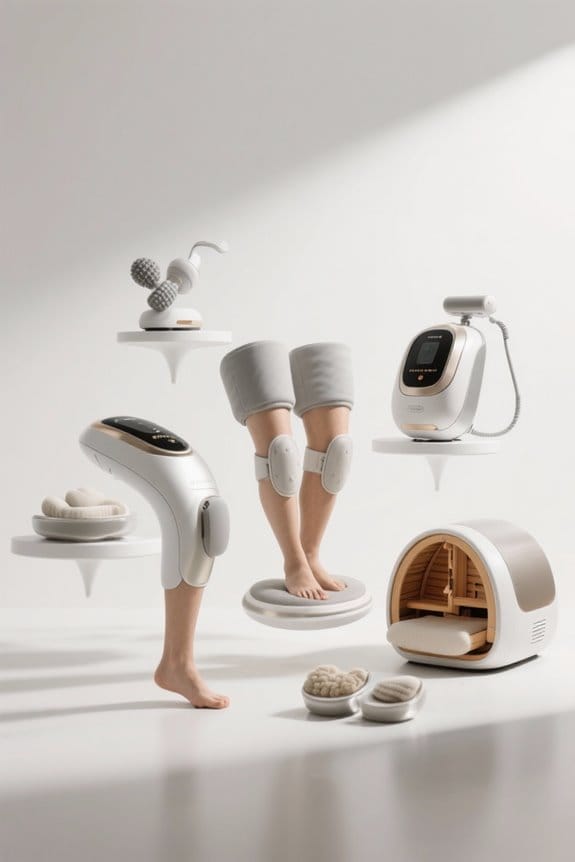
Incorporating tools like massage guns for calves can further enhance muscle recovery and alleviate soreness, complementing the benefits of regular stretching.
Calf Muscle Stretch With a Wall

1. Positioning****: Stand about an arm’s length away from the wall, placing our hands on it for support.
2. Foot Stance****: Move one foot forward with a slight knee bend while keeping the back leg straight, pressing the heel into the ground.
3. Duration****: Hold this position for 15-30 seconds to target the calf muscle anatomy properly.
4. Repeat**: To enjoy the wall stretch benefits, we should repeat it 2-3 times on each leg, avoiding common stretching mistakes like lifting our heels. This method’s simple yet efficient for reducing calf muscle tightness and enhancing flexibility! Regular sessions utilizing infrared sauna mats can also promote muscle recovery** and enhance relaxation benefits.
Calf Muscle Stretch Without a Wall
Calf muscle stretches can be a game-changer for anyone looking to boost flexibility and reduce tightness, especially when we don’t have a wall nearby. Here’s how to do it:
1. Step Forward: Start by stepping forward with one foot while keeping the back leg straight and the heel down.
2. Shift Your Weight: Gradually shift your weight onto the front leg, ensuring the back knee remains straight.
3. Hold: Hold this position for 15 to 30 seconds to effectively target the calf muscles.
4. Repeat: Do this stretch 2 to 3 times on each leg.
Regularly practicing calf stretches can enhance blood circulation, which is beneficial for muscle recovery and overall well-being. Incorporating this stretch into our dynamic warm-ups can enhance ankle mobility and improve balance, preventing cramps and boosting overall athletic performance.
Heel Cord Stretch for Flexibility
When it comes to enhancing flexibility in our calf muscles, the Heel Cord Stretch is a true game-changer.
1. Targeted Muscles: This stretch focuses on both the gastrocnemius and soleus muscles, providing significant heel cord benefits.
2. Proper Technique: To perform, bend the back knee slightly while pushing your hips toward a wall, keeping both heels flat on the ground.
3. Stretching Frequency: Aim to hold the stretch for 15-30 seconds, and incorporate it into our warm-up routine for ideal results.
4. Performance Boost: Regular practice reduces tightness and lowers the risk of cramps, especially vital for athletes participating in running or jumping activities.
5. Additional Benefits: Incorporating techniques like the Heel Cord Stretch can also enhance overall well-being by alleviating muscle stiffness and promoting better circulation.
Let’s make the Heel Cord Stretch a staple in our routine and enjoy the flexibility it brings!
Effective Towel Stretch Technique
Stretching is an essential part of our fitness routine, and the Towel Stretch technique is one of the most effective methods for relieving calf tension. 1. Positioning: Sit with legs extended, loop a towel around the ball of one foot. 2. Stretch: Gently pull the towel toward your body; aim for 15-30 seconds. This duration optimizes the towel benefits, providing maximum relaxation for our calves. 3. Breathing: Remember to breathe deeply; this helps us relax and enhances the stretch’s effectiveness. 4. Consistency: By incorporating this stretch into our routine, we can prevent calf tightness, especially post-workout. Proper technique will lead to improved flexibility in our gastrocnemius and soleus muscles, making it a game-changer for athletes and fitness enthusiasts alike. Consider using an infrared sauna pad for additional muscle relaxation benefits, as they can effectively relieve chronic pain and improve circulation.
Strengthening With Calf Raises
Adding calf raises to our routine can be a game-changer for strengthening those important muscles. 1. We can start by mastering the basic calf raise. Stand shoulder-width apart, slowly lift our heels, and hold that position for a few seconds before lowering. 2. To enhance effectiveness, let’s explore calf raise variations—both seated and standing. This targets different parts of our calves, contributing to overall strength. 3. It’s essential to maintain proper exercise form to prevent injuries. 4. To build strength, we should aim for 3 sets of 10-15 repetitions, several times a week. 5. By increasing our workout frequency, we’ll notice improved calf endurance and stability. With each raise, we empower our muscles and foster better movement, helping us stay active! A great complement to calf raises could be using a leg recovery massager that improves circulation and relieves muscle soreness, aiding in muscle recovery and overall relaxation.
Incorporating Resistance Exercises
Incorporating resistance exercises into our routine can be a game-changer for strengthening our calf muscles, especially when we combine them with traditional methods.
1. Dorsiflexion Exercises****
Using resistance bands, we can perform dorsiflexion exercises to enhance the strength of the tibialis anterior muscle. This targets our lower leg effectively, building essential stability.
2. Plantarflexion Control****
Next, let’s focus on plantarflexion control, using resistance bands to improve endurance. By engaging our calf muscles this way, we promote better muscle control during activities.
3. Comfort and Resistance****
Choosing the right resistance band is vital; it should provide a comfortable level of resistance without straining our muscles. For an enhanced massage experience, consider using a massage lotion warmer to keep your muscles relaxed and ready for exercise.
Frequently Asked Questions
How Do You Relieve a Calf Muscle?
To relieve a calf muscle, we can gently stretch those tight fibers like reaching for the sky. Let’s incorporate foam rolling and soothing massage techniques, melting away tension and restoring our legs’ flexibility and strength.
How to Get Relief From Calf Muscle Pain?
To get relief from calf muscle pain, we can use self-massage techniques, incorporate stretching exercises, and enjoy the foam rolling benefits. These methods help alleviate tightness and improve flexibility, promoting overall calf health.
What Emotions Are Held in the Calves?
Like a tightly wound spring, our calf muscle emotions hold physical tension, reflecting stress or anxiety. By understanding this connection, we can seek emotional release through mindfulness and movement, fostering both physical relaxation and emotional well-being.
How to Relieve Calf Muscle Pain During Pregnancy?
To relieve calf muscle pain during pregnancy, we should focus on calf stretches, incorporate prenatal yoga, and follow hydration tips. These practices can effectively ease discomfort and promote relaxation for both us and our baby.