As an Amazon Associate, we earn from qualifying purchases. Some links on this site are affiliate links at no extra cost to you. Our recommendations are based on thorough research and editorial judgment.

How Infrared Saunas Differ From Traditional Finnish Saunas

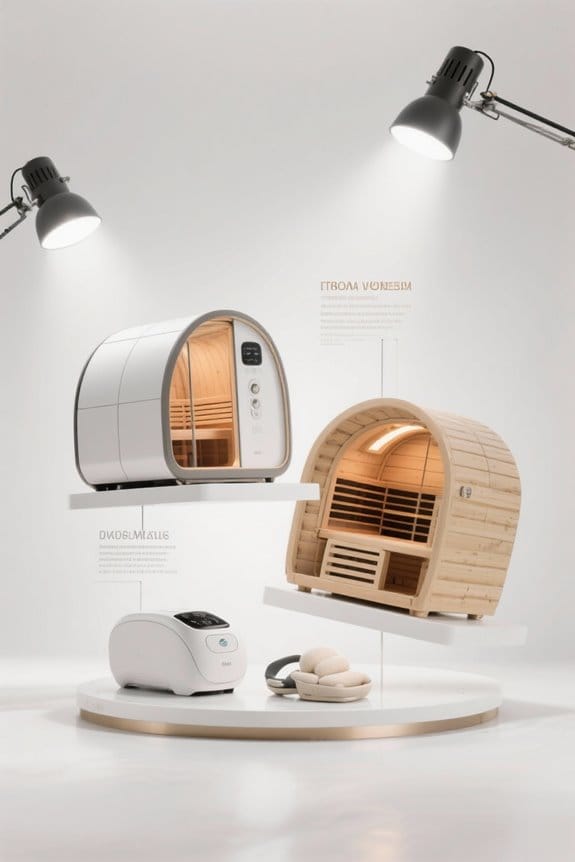
Infrared saunas and traditional Finnish saunas differ greatly, making them perfect for various preferences. 1) Temperature: Finnish saunas operate at 175°F to 200°F for deep sweating, while infrared saunas are milder, at 120°F to 140°F. 2) Construction: Traditional saunas need expert installation, whereas infrared saunas come flat-packed for easy setup. 3) Maintenance: Infrared saunas require less upkeep and are more energy-efficient. 4) Health Benefits: Both promote cardiovascular health, but traditional saunas excel in detoxification. Stick around, and you’ll discover even more details!
Key Takeaways
- Traditional Finnish saunas operate at higher temperatures (175°F to 200°F), while infrared saunas typically operate between 120°F and 140°F.
- Infrared saunas heat the body directly and preheat faster (15 minutes) compared to traditional saunas (45-60 minutes).
- Traditional saunas have greater cardiovascular benefits and support muscle recovery through intense sweating, while infrared saunas also offer health advantages though less extensively studied.
- Infrared saunas are generally more affordable, costing between $1,000 to $3,000, while traditional saunas range from $3,000 to over $10,000.
- Traditional saunas require more ventilation and energy (6 kW), whereas infrared saunas are more energy-efficient (1-2 kW) with lower maintenance needs.
Understanding Sauna Culture & Traditions
When we think about sauna culture, it’s impossible to overlook the rich traditions that have shaped experiences, especially in Finland. 1. Sauna Culture & Community: Traditional Finnish saunas aren’t just places to sweat; they’re essential communal spaces, fostering relaxation and connection. 2. High Temperatures & Löyly: Operating between 175-200°F, these saunas create a unique “löyly experience,” where steam enhances well-being. 3. Health Benefits: Regular sessions improve circulation and reduce stress, making sauna culture a game-changer for our health. 4. Contrast of Heat and Cold: After basking in warmth, we often cool down in fresh air or cold water, maximizing health benefits. 5. Shared Experiences: These sessions promote our collective well-being through shared moments that strengthen bonds. Investing in high-quality, natural materials leads to improved longevity and safety. Immerse yourself in sauna culture**; it’s worth it!
Temperature Tolerance: Finnish vs. Infrared

While we all have different preferences for heat, understanding temperature tolerance can help guide our sauna choices. 1. Traditional Finnish Saunas**: These operate at high temperatures, typically between 175°F and 200°F (80°C to 93°C), creating an intense environment perfect for deep sweating. This high heat encourages heavy perspiration, enhancing detoxification. 2. Infrared Saunas: In contrast, we find infrared saunas operate at lower temperatures, usually between 120°F and 140°F (49°C to 60°C). This milder heat directly warms our bodies instead of the surrounding air, making it a game-changer for users who prefer a more comfortable experience. Due to these temperature differences, longer sessions are often more manageable in infrared saunas, allowing us to enjoy the benefits of heat therapy without the oppressive high heat. Furthermore, portable infrared sauna** designs offer convenient, space-saving solutions for home use, with options like compact foldable tents and ergonomic setups for enhanced relaxation.
Heating Action: How Each Sauna Operates

3. Both sauna types promote heat therapy and cardiovascular function, but the direct radiant heat of infrared saunas penetrates the body, elevating body temperature without surrounding humidity. Infrared saunas utilize far infrared heating technology to deliver efficient warmth and health benefits, making them a popular choice for home use.
Space Considerations and Installation
- Installation: Traditional Finnish saunas often need bespoke construction and expert installation, while infrared saunas arrive flat-packed for simple assembly.
- Compact Models: Infrared saunas offer compact models that fit small spaces, making them ideal for home settings.
- Time to Preheat: Infrared saunas warm up in about 15 minutes, while traditional saunas can take 45-60 minutes.
- Ventilation: Traditional saunas require designated ventilation, unlike infrared options that need minimal ventilation and lower energy requirements.
Portable infrared saunas are cost-effective investments for wellness, providing long-term health benefits that can outweigh initial purchase expenses.
Choosing wisely can optimize our sauna experience!
Maintenance Requirements for Each Type
Infrared saunas are also energy-efficient, boasting components with long lifespans, while traditional heaters need frequent checks and replacements. If you want low maintenance with quick results, infrared saunas can be a game-changer for your relaxation routine. Consider what best fits your lifestyle! Infrared saunas also provide significant effects on overall wellness through benefits like detoxification, stress relief, and improved circulation, making them an appealing option for many users.
Health Benefits of Traditional Finnish Saunas
When we consider the incredible health benefits of traditional Finnish saunas, it’s hard not to be excited about their transformative potential!
- Detoxification: The high temperatures, ranging from 175°F to 200°F, encourage sweating, helping eliminate toxins and heavy metals.
- Cardiovascular Health: Regular sauna sessions can considerably improve cardiovascular health, reducing risks of sudden cardiac death by 63%.
- Muscle Recovery: After an intense workout, these saunas provide deep relaxation and muscle recovery, alleviating pain and promoting healing.
- Social Aspect: Finnish saunas are about community bonding, allowing us to relax and connect with loved ones.
- Improved Sleep: Enjoy better sleep quality as regular sauna use regulates body temperature, making us feel relaxed and sleepy.
To further enhance relaxation, consider using a Shiatsu Back Massager chair cushion, which can complement sauna sessions by targeting muscle tension effectively.
Experience these remarkable benefits today!
Health Benefits of Infrared Saunas
For those who’ve enjoyed the benefits of traditional Finnish saunas, infrared saunas can feel like a game-changer. Here’s what we love about them:
1. Health Benefits**: Infrared saunas operate at lower temperatures (120-140°F), making them more comfortable for heat-sensitive individuals while still promoting detoxification**.
2. Pain Relief****: The deep penetration of infrared heat offers effective pain relief for chronic conditions like arthritis, aiding muscle and joint recovery.
3. Cardiovascular Health****: Regular use can enhance cardiovascular health by increasing heart rate and improving circulation, similar to moderate exercise.
4. Mental Health Benefits: They may alleviate symptoms of chronic fatigue syndrome and boost mood, providing mental health advantages alongside physical ones.
5. Convenience and Maintenance: Many infrared sauna products, like the Infrared Sauna Blanket, have portable designs and are easy to maintain, making them accessible for at-home use.
These features make infrared saunas a fantastic addition to any wellness routine.
Cost Comparison: Infrared vs. Traditional
In our quest to find the perfect sauna experience, the cost comparison between infrared and traditional Finnish saunas is essential. 1. Affordability**: Infrared saunas generally come with a friendly price tag, often ranging from $1,000 to $3,000, making them accessible for most budgets. 2. Initial Costs: Traditional Finnish saunas can set you back anywhere from $3,000 to over $10,000, especially due to bespoke installation. 3. Operating Costs: Infrared saunas are energy-efficient, using only 1-2 kW compared to 6 kW for traditional ones. 4. Maintenance Costs: With lower maintenance needs, infrared saunas save you time and effort. While traditional saunas offer durability and an authentic sauna experience, the cost-effectiveness of infrared options is a game-changer for many buyers. Infrared saunas also feature advanced entertainment options**, such as Bluetooth connectivity, enhancing the overall relaxation experience.
Addressing Common Misconceptions About Saunas
What are the most common misconceptions about saunas that can mislead potential buyers?
1. Infrared vs. Traditional: Many think only infrared saunas emit far-infrared radiation. In reality, traditional saunas often produce higher levels due to their heating methods.
2. Detoxification Effectiveness: People assume infrared saunas are superior for detoxification, but traditional saunas facilitate heavier sweating, which can eliminate certain heavy metals efficiently.
3. Health Benefits: There’s a belief that infrared saunas lack cardiovascular benefits, yet traditional saunas have been well-studied in this area.
4. Maintenance Needs: Contrary to popular belief, infrared saunas may seem easier to maintain, but traditional saunas offer durability through strict quality regulations.
Infrared sauna blankets offer customizable heat settings for personalized experiences, making them appealing for users seeking specific health benefits.
Understanding these key points can guide us toward making informed sauna purchases with confidence!
Frequently Asked Questions
Is an Infrared Sauna Better Than a Finnish Sauna?
We believe the better choice depends on personal preference. Infrared saunas offer convenience, energy efficiency, and gentle heat penetration for skin rejuvenation, while Finnish saunas excel in cardiovascular health and social user experiences. Each has unique health benefits.
Is an Infrared Sauna Better Than a Traditional Sauna?
We believe an infrared sauna offers unique benefits, like energy efficiency and muscle recovery, while the traditional sauna experience excels in communal vibes. Ultimately, it’s about user preference and preferred detoxification methods for optimum skin health.
What Are the Disadvantages of Infrared Sauna?
While we enjoy energy efficiency, infrared saunas bring health risks. We’re concerned about moisture retention and temperature regulation, plus potential skin sensitivity and detoxification claims. The device cost and limited user experience also affect longer session durations.
Does Joe Rogan Use Infrared or Traditional Sauna?
Joe Rogan’s sauna preference leans toward infrared saunas, emphasizing their recovery benefits and comfort. We appreciate how this sauna technology fits into our wellness practices, enhancing detox, heat therapy, and relaxation techniques alongside fitness routines.